Common Mistakes in Graphic Design

By Maude Tessier
Graphic Designer
Creating a visual might seem simple. But often, the result falls short, without us really knowing why. The good news is that most of the mistakes we see aren’t due to a lack of talent or creativity. They stem from a few basic principles that people haven’t learned yet. Without passing judgment, here are the most common mistakes my colleagues and I observe as professionals—and how they can be avoided.
1 - Forget about margins (and expressive white space)
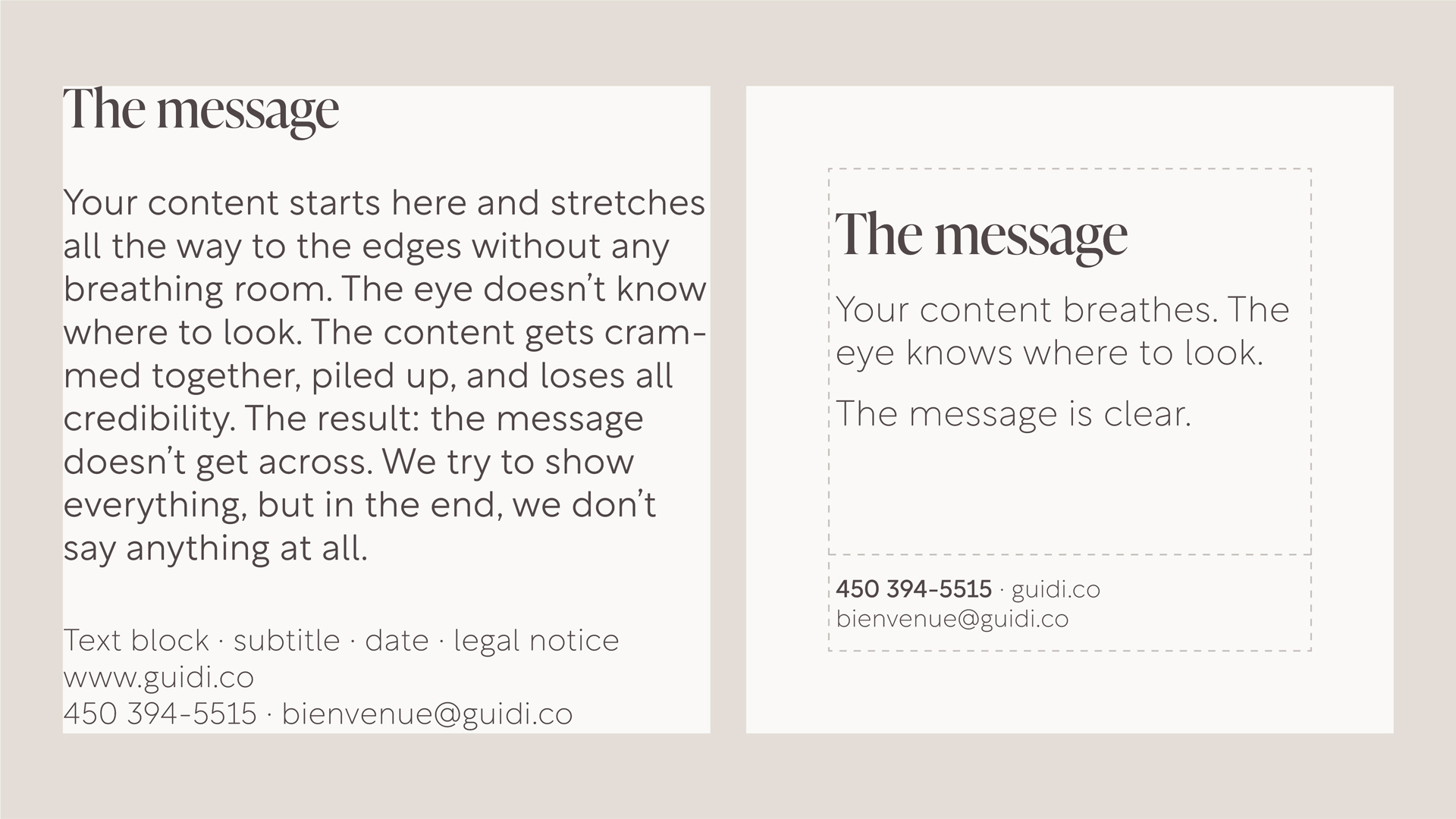
As a graphic designer, I often notice this: whether it’s on a poster, an Instagram post, a business card, or a website, one of the most common mistakes is neglecting the margins. The natural instinct is to want to fill all the available space. The result: the content ends up right up against the edges, the eye doesn’t know where to look, and the message gets lost.
Margins are what give a layout structure and make it look polished. They protect the content during printing, guide the eye to what’s important, and on the web, they ensure that no information is cut off on the screen. A well-spaced visual inspires confidence, whereas an overcrowded one can quickly lose credibility.
And that’s where expressive negative space comes into play: in design, empty space isn’t an oversight—it’s a tool. It highlights elements, creates a hierarchy, and lets the message shine through. If a designer has left space in a composition, it’s rarely by accident. This empty space is often intentional, and filling it would detract from the overall effect. The less clutter there is, the stronger the message.
2 - Overloaded Logos
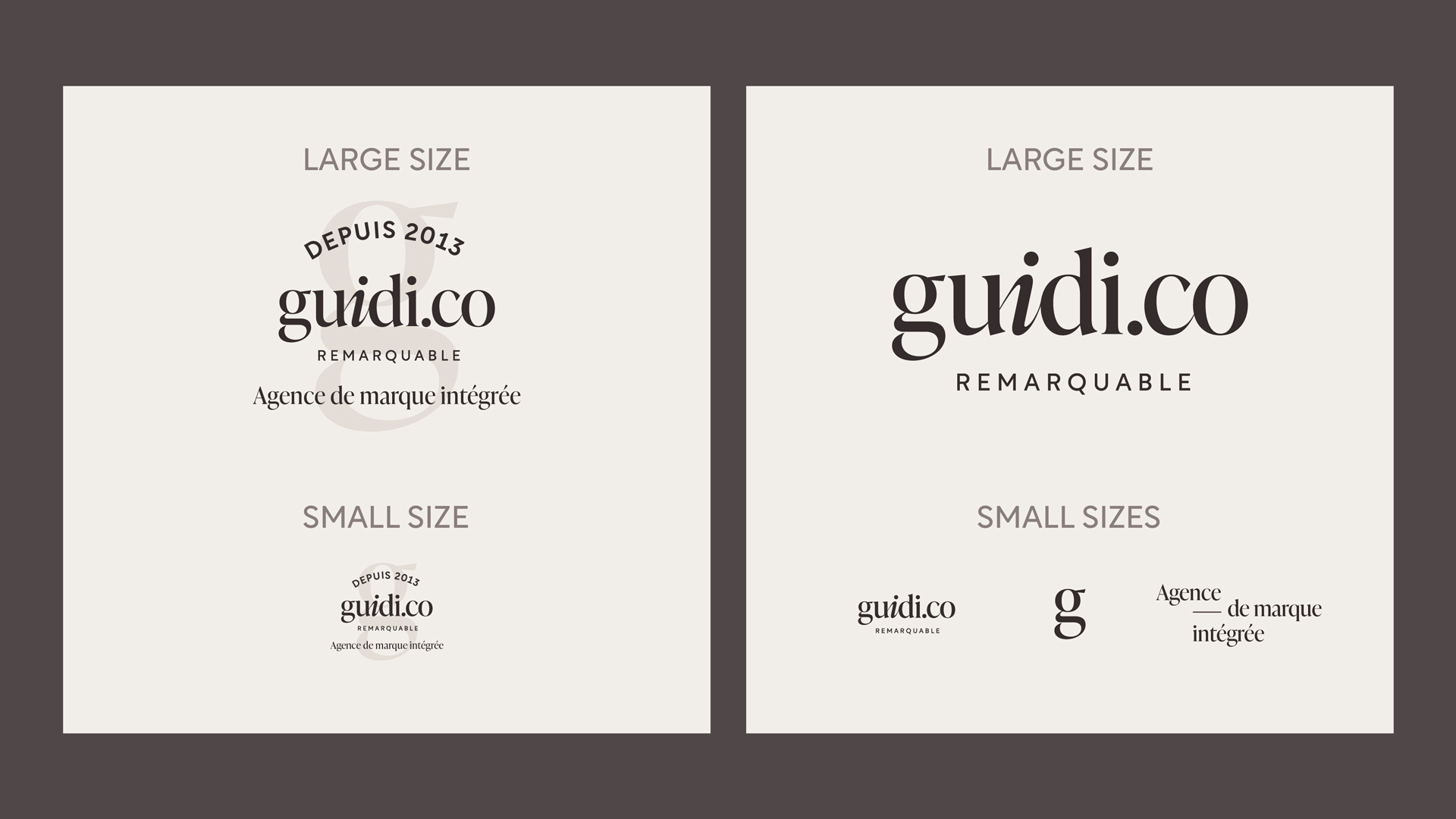
Marie-Eve, a brand strategist, is one of those who notices this kind of mistake: overloaded logos. Very often, the logo is the first impression a company makes, and yet it is one of the elements most frequently overloaded—both with graphic elements and text. The intention behind it is good: we want to say everything, show everything, and include everything. But a logo isn’t a summary of a company. It’s a signature.
When it’s too cluttered, it poses a real problem: it no longer works on all communication platforms. On a business card, on a website, on embroidery, or as a favicon in a browser tab. The more elements there are, the more illegible it becomes at small sizes. What looked detailed and professional on a large screen becomes a blurry block of just a few pixels.
Simplicity does not mean a lack of ambition, because a minimalist logo is not ordinary—it is, rather, one that is easily recognizable and stands the test of time. Almost all of the world’s most iconic brands are strikingly simple. This is no coincidence.
3 - Lack of visual consistency
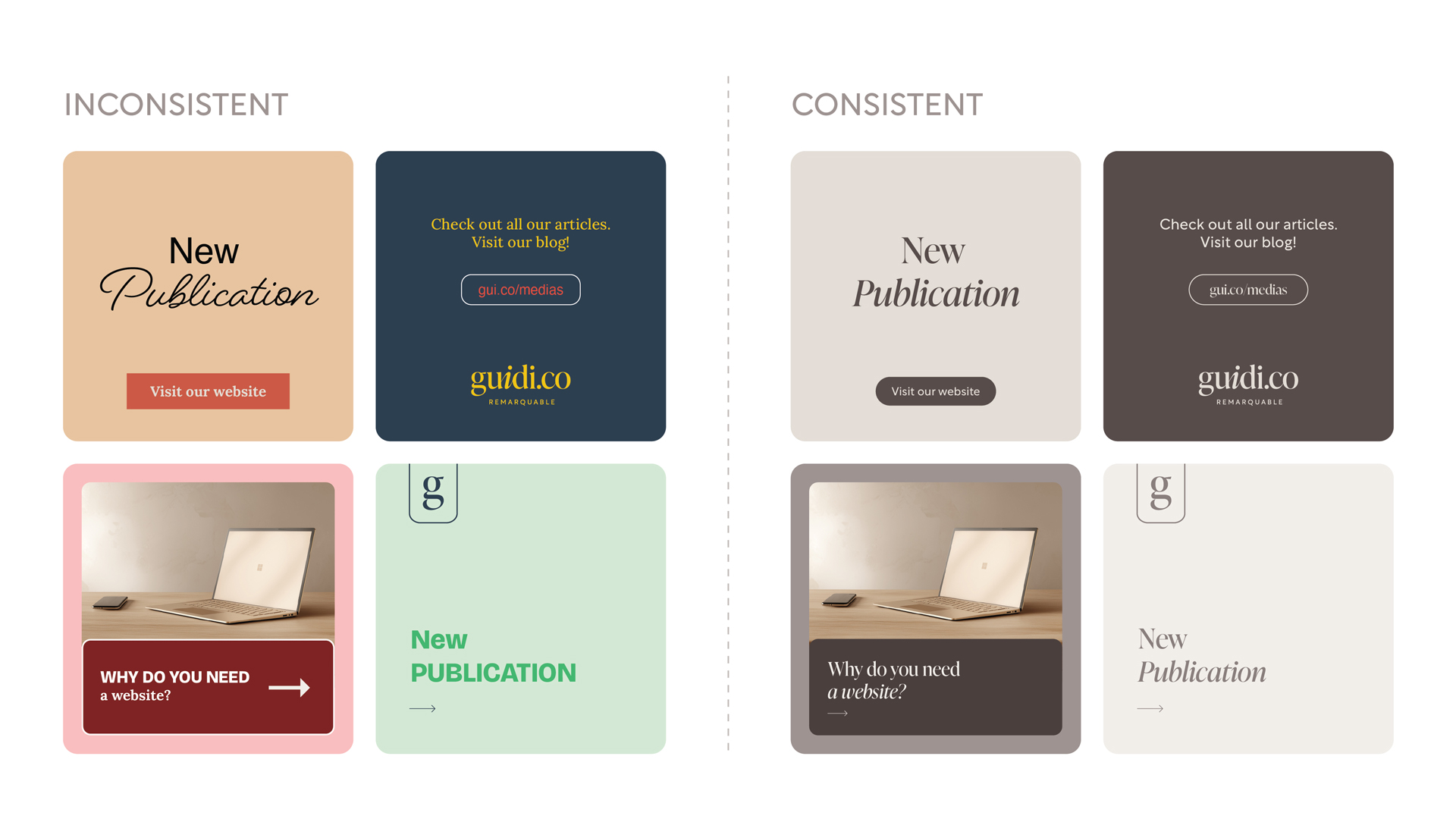
Audrée, one of our art directors, points to a lack of consistency in visuals as one of the most common mistakes she sees. Visual consistency is what makes a brand instantly recognizable, without even having to read its name. It’s the same font family, the same color palette, and the same style of illustrations or photos. When these elements are consistent, the brand sticks in people’s minds.
Inconsistency has a direct impact on credibility. A company whose visuals lack consistency gives the impression of being disorganized, even if that’s not the case at all in reality. The good news is that this is one of the easiest problems to fix: define your colors, fonts, and graphic elements in a style guide and stick to it.
4 - Overcrowded visuals
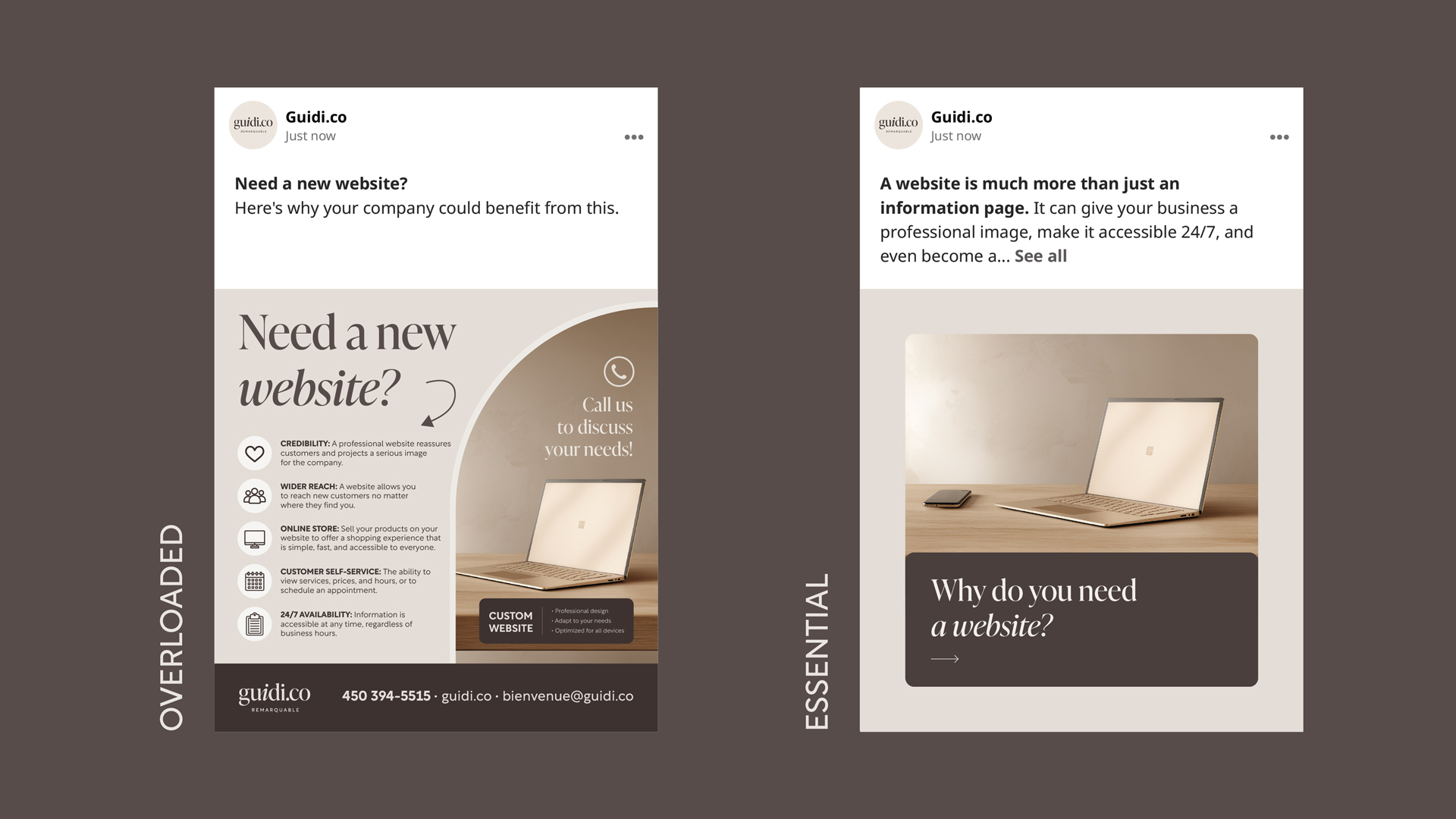
As for Gabrielle, one of our graphic designers, she often notices visuals that are too cluttered—where people have tried to cram everything in. There are too many decorative elements, too much text, and an excessive number of effects. The result is a visual where everything is on the same level and nothing really stands out.
On social media, this is particularly obvious. We scroll A cluttered visual doesn’t make people want to stop and look. Too much text? The desire to read disappears before they’ve even started. However, there is a good alternative: limit the visual to the essentials and move secondary information into the accompanying text. Important details will find their place there, without weighing down the visual.
Sometimes, the problem isn't what you put in it, but the medium you've chosen. Asking yourself what the real need is behind the message you want to convey is the key step in finding the right format for sharing it.
5 - The lack of hierarchy
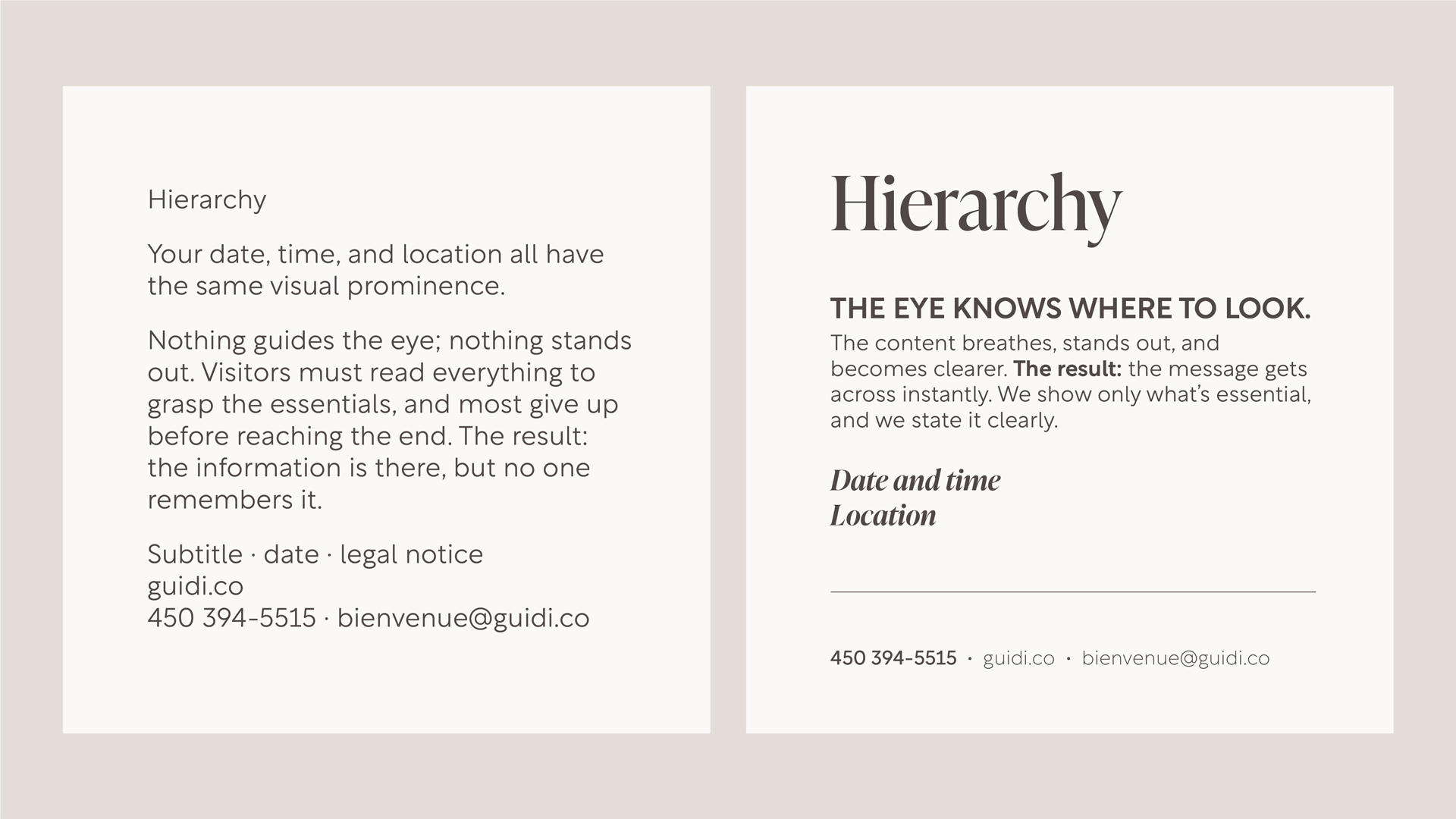
Finally, Alexia, one of our graphic designers, points out a mistake that’s hard to miss: the lack of hierarchy in the information. When everything is presented at the same visual level, the eye doesn’t know where to look first and eventually loses focus.
Visual hierarchy is the art of organizing information to guide the eye. It is the combination of size, weight, and color that creates a clear distinction between what is primary and what is secondary. When content is well-structured, the reader instinctively knows what to look at, and the key points stand out naturally.
And this applies everywhere: a poster, a website, a presentation, or an internal document. No matter the medium, when everything is given the same visual weight, nothing stands out. Creating layers of information helps your readers and ensures that the most important message gets across.
In summary
We see these mistakes all the time, and that’s not meant as a criticism. Most of the time, they simply stem from the fact that no one ever explained these design principles to us. Now that you know them, you’re already one step ahead!
And if you want to make sure your visuals live up to your services and products, Guidi.co is here for that. We work with you to create designs that make an impact, are consistent, and reflect who you are.
